TL;DR:
- Skipping site checks before signing contracts exposes small businesses to avoidable financial and legal risks. Conducting thorough inspections strengthens contract reliability, prevents scope creep, and protects profitability. Implementing paid, combined digital and physical site audits rationalizes project scope and sets clear expectations.
A site check is a pre-contract verification process that confirms real-world conditions match what a client claims before you sign anything. Skipping this step is one of the most common reasons small business owners and freelancers absorb unexpected costs, face scope creep, or end up in legal disputes. Understanding why client contracts need site checks protects your time, your budget, and your professional reputation. This guide covers the specific risks of skipping inspections, how thorough audits build contract integrity, and practical steps you can take right now.
What risks arise from skipping site checks in client contracts?
Skipping a site check before signing a client contract exposes you to financial and legal risks that are entirely avoidable. The U.S. construction industry alone loses $171 billion annually to rework caused by missed site inspections. That number reflects a systemic problem: contracts written on assumptions instead of verified facts.
The most common pitfalls include:
- Scope creep caused by undisclosed site conditions that expand the project beyond the original agreement
- Budget overruns from ideal-lot assumptions that ignore hidden defects, restricted access, or legacy issues
- Timeline failures when permits, utilities, or compliance gaps surface mid-project
- Legal disputes when verbal promises from a client conflict with the written contract terms
- Stop-work orders triggered by safety or compliance failures that a site check would have caught early
Contracts without site checks risk verbal promises conflicting with written terms, leading directly to budget overruns and legal exposure. That conflict is not theoretical. It happens when a client tells you access is easy, utilities are ready, and the timeline is flexible, and none of that turns out to be true once work begins.
Missed defects and site-specific hazards cause 1 in 3 construction delays. Digital inspections reduce error reporting by 40%, but they do not eliminate the need for physical verification. The gap between what a digital scan finds and what a walkthrough reveals is where most unpleasant surprises live.

How do site audits strengthen contract trustworthiness?
Professional site audits, also called pre-project site assessments or client contract site audits, transform contracts from documents built on assumptions into enforceable agreements grounded in reality. Site inspections are Phase 1 contract components that validate logistical feasibility and compliance before any agreement is signed. That validation is what makes a contract trustworthy rather than just optimistic.
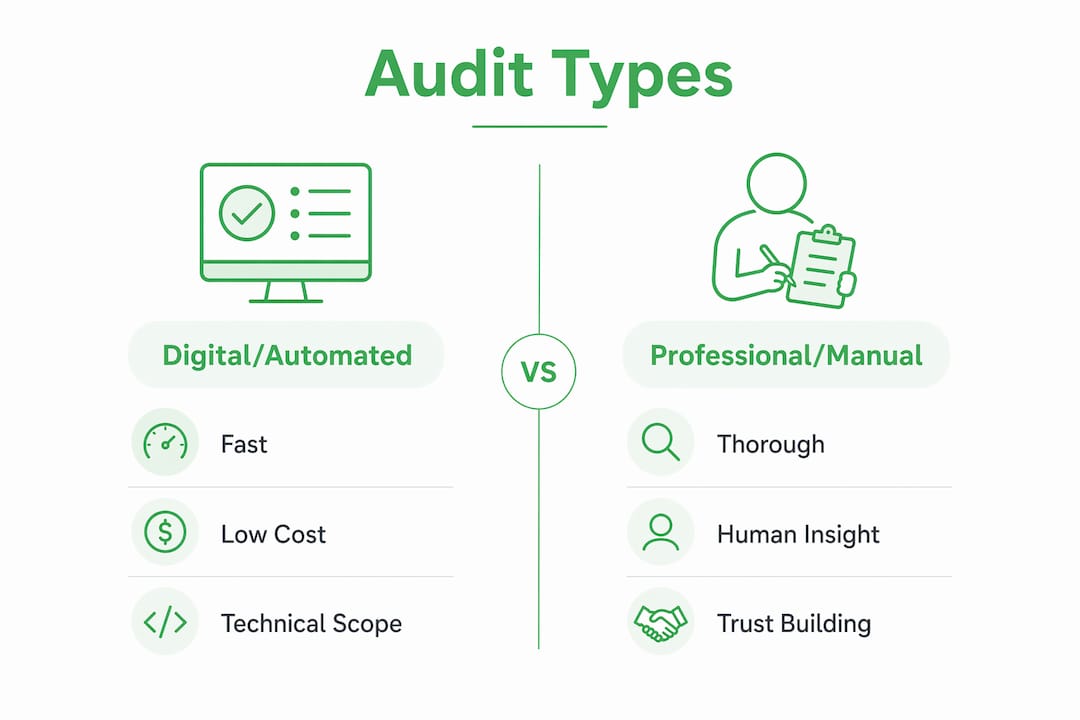
Here is how digital and manual audits compare:
| Audit Type | Strengths | Limitations |
|---|---|---|
| Digital/Automated | Fast, low cost, covers technical signals | Misses business-logic errors and hidden vulnerabilities |
| Manual/Human-Led | Detects operational constraints and unknown risks | Takes more time, costs more upfront |
| Combined Approach | Full coverage of technical and physical realities | Requires coordination but delivers the strongest contract foundation |
Professional audits typically take 60–90 minutes and cost $1,500–$5,000 depending on site size and depth. A 90-minute pre-project audit can prevent up to 40 hours of scope creep by setting realistic budgets and timelines. That is a strong return on a relatively modest investment.
Relying solely on automated audits misses critical errors that only a human inspection finds. Manual audits build genuine client trust and justify premium pricing because they demonstrate that you understand the actual conditions of the work, not just the surface-level data.
Pro Tip: Treat your site audit report as a deliverable, not just internal prep work. Sharing it with the client before contract signing sets clear expectations and positions you as a professional who does not guess.
Which factors should you evaluate during a contract site check?
A thorough site check covers both physical conditions and contractual terms. A site visit checklist includes legal readiness, site conditions, access, utilities, topography, permits, and risk items to produce realistic quotes and schedules. Skipping any of these creates a blind spot that the contract cannot protect you from.
Here are the key factors to verify before signing:
- Site access: Can equipment, personnel, or deliverables reach the location without restrictions?
- Utility readiness: Are power, water, internet, or other required services available and functional?
- Permit and compliance status: Are all necessary permits in place, or will delays occur waiting for approvals?
- Known hazards: Are there environmental, structural, or safety risks that affect project scope or insurance?
- Scope alignment: Does the physical site match the client's description of the project requirements?
- Contract clauses: Do the scope, timeline, and risk allocation terms reflect what you actually observed onsite?
- Verbal promises: Are any client assurances documented in writing within the contract?
Small business owners often assume contracts guarantee security, but legal experts warn that contracts only protect you when they accurately reflect site realities. A contract that describes a project as straightforward when the site is not is a liability, not a safeguard.
Pro Tip: Read every contract clause aloud during your site visit. Your eye glosses over inconsistencies; your voice does not. If a clause does not match what you are standing in front of, flag it before you sign.
How can freelancers implement site checks in their contract process?
Freelancers and small business owners can build site checks into their standard workflow without large overhead costs. The key is sequencing: start with a digital assessment, then escalate to a physical inspection when the contract size and risk level justify it.
-
Run a digital pre-audit first. A pre-project website audit helps freelancers avoid absorbing unpaid extra work by aligning proposals with actual site conditions. These audits typically take 60–90 minutes and become valuable deliverables you can share with the client.
-
Schedule a physical site visit for higher-value contracts. In-person site inspections prevent the unpleasant surprises that digital tools cannot foresee. If the contract value exceeds your risk tolerance, a physical walkthrough is non-negotiable.
-
Charge for the site audit as a professional service. Charging for site checks establishes professional boundaries and anchors project budgets in reality rather than client assumptions. It also signals that you take the pre-contract phase seriously, which filters out clients who do not.
-
Document everything in writing. After your site check, summarize findings in a written report and attach it to the contract as an exhibit. This prevents verbal promise conflicts and gives you legal standing if disputes arise later.
-
Use digital verification tools for client website legitimacy. Before you invest time in a physical visit, confirm the client's online presence is legitimate. Tools like Verified fyi help you assess whether a client's website shows red flags before you commit further resources.
Key takeaways
Client contracts need site checks because a contract is only as reliable as the real-world conditions it is built on, and verification before signing is the only way to confirm that alignment.
| Point | Details |
|---|---|
| Site checks prevent costly surprises | Missed inspections contribute to $171 billion in annual rework costs across U.S. industries. |
| Manual audits outperform automated ones | Human-led inspections catch business-logic errors and hidden risks that automated tools miss. |
| Charge for your audit | Treating site checks as a billable phase sets professional boundaries and grounds budgets in reality. |
| Document findings before signing | Attaching a written site report to the contract eliminates verbal promise disputes. |
| Digital tools are a starting point | Use website verification tools to screen client legitimacy before investing in a physical visit. |
The audit is the contract, not the prep work
I have watched freelancers lose thousands of dollars on projects that looked clean on paper. The client had a professional website, a clear brief, and a signed contract. What they did not have was a site check. Every one of those situations shared the same pattern: the contract described an ideal version of the project, and the site revealed a different reality entirely.
The misconception I see most often is that a signed contract is the finish line of the pre-project phase. It is not. The site check is the finish line. The contract is just the document that records what you found. When you skip the inspection, you are signing a document that describes a project you have never actually seen.
Charging for site audits changed how I work with clients. It filters out the ones who want a quick signature and no scrutiny. The clients who push back on a paid audit are almost always the ones hiding conditions that would change your quote. That resistance is itself a red flag worth noting.
The role of site assessments in contract security is not a formality. It is the mechanism by which you convert a client's promises into verified facts. Treat it that way, and your contracts will hold up. Skip it, and you are betting your business on someone else's word.
— Nick
Check your client's site before you sign anything
Before you commit to a contract, you need to know the client's online presence is legitimate. A polished website does not guarantee a trustworthy business, and a quick verification check can surface red flags that save you from a bad engagement entirely.
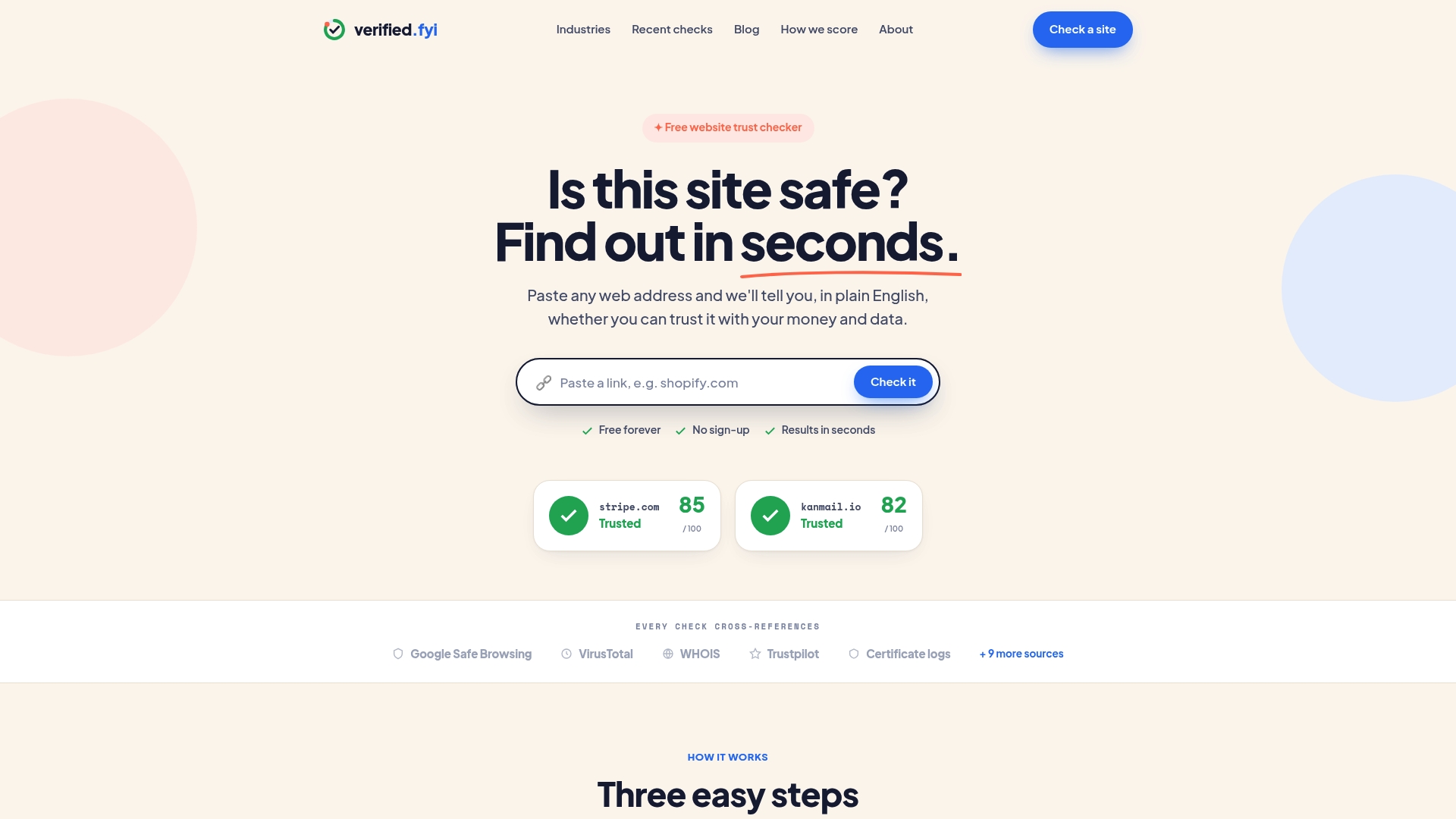
Verified fyi analyzes over 200 security and reputation signals to give any website a trust score from 0 to 100. You paste a URL and get a clear verdict in seconds, no technical knowledge required. It is the fastest way to add a digital site check to your pre-contract process. Start with recently checked websites to see how other sites score, or go straight to verified.fyi and check your next client's site right now.
FAQ
What is a site check in a client contract?
A site check is a pre-contract inspection that verifies real-world conditions match the project scope described in the agreement. It covers physical access, utilities, permits, hazards, and compliance status before any work begins.
Why do client contracts need site checks before signing?
Contracts without site checks risk verbal promises conflicting with written terms, leading to legal disputes and budget overruns. A site check confirms the contract accurately reflects actual conditions.
How long does a professional site audit take?
Professional site audits take 60–90 minutes and cost between $1,500 and $5,000 depending on scope and site complexity. That investment can prevent up to 40 hours of scope creep.
Should freelancers charge for site checks?
Yes. Charging for site audits establishes professional boundaries and anchors project budgets in verified facts rather than client assumptions. It also filters out clients who are not serious about transparency.
Can a digital audit replace a physical site inspection?
No. Digital tools cannot replace the operational insight from a physical walkthrough. A combined approach, starting with a digital audit and escalating to an in-person visit for higher-risk contracts, delivers the most complete picture.