Finding a website safety scanner that delivers transparent results without hidden requirements or vague metrics challenges small business owners and e-commerce operators. Many tools either hide pricing, lock features behind registration, or only provide a single unexplained score instead of verifiable signals. This comparison covers free access, trust badge visibility, and detailed signal reporting so business owners and operators can pick a scanner that meets their standards without guesswork.
Table of Contents
verified.fyi
At a Glance
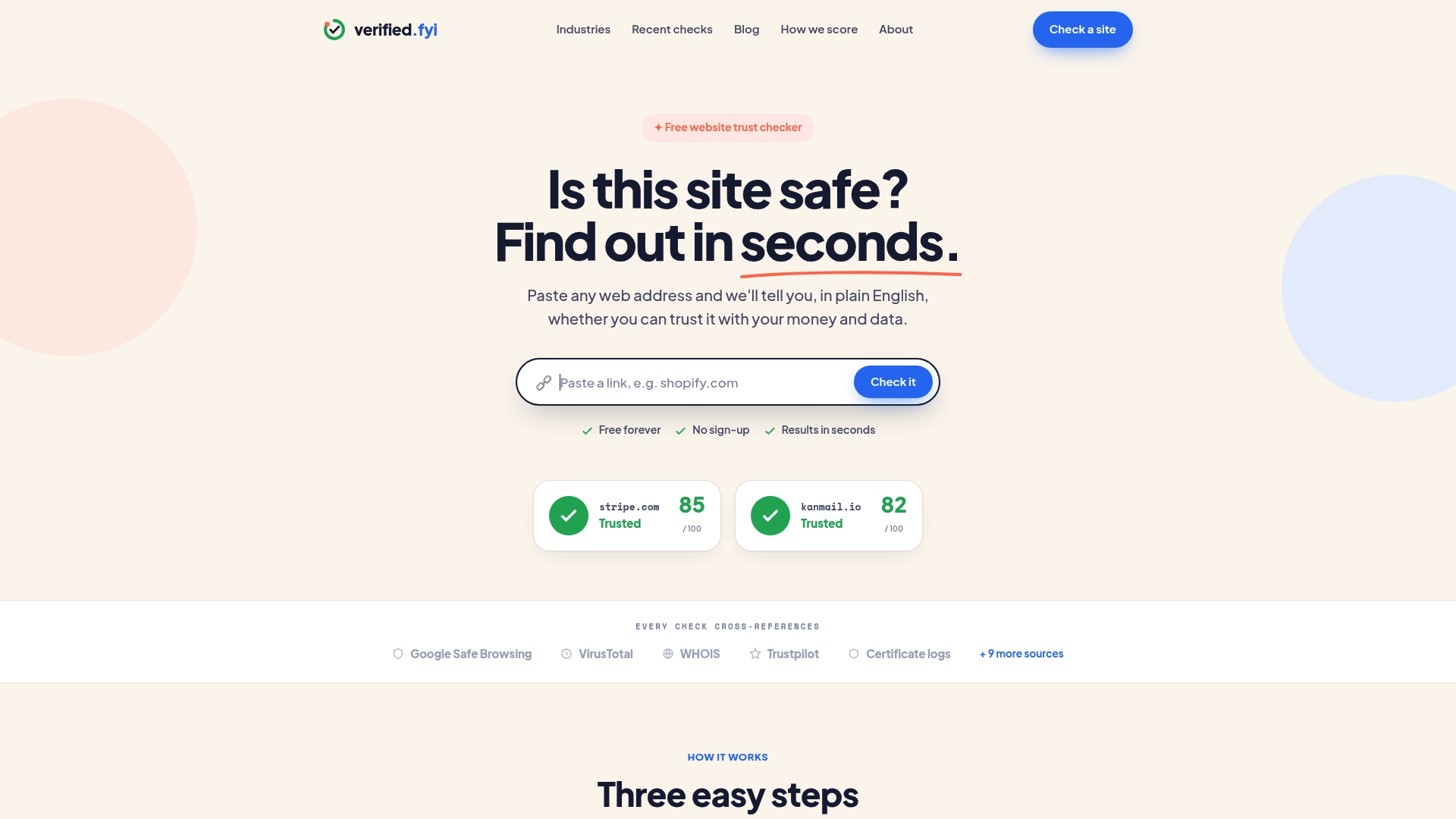
Verified fyi's marketing materials state it analyzes 200+ signals to generate a trust score on a 0 to 100 scale. The tool cross-references public sources such as Google Safe Browsing, VirusTotal, WHOIS, Trustpilot, and certificate logs. The service is free and does not require sign up.
Core Features
Verified fyi runs real time checks across security, ownership, reputation, and compliance signals and then explains which signals moved the score. The site shows the raw indicators and pulls data from public services like Google Safe Browsing and VirusTotal to back its verdict. It also offers embedable trust badges that sites can display to show visitors the evaluated trust status.
Key Differentiator
Verified fyi stands out because it publishes a clear, multi source breakdown for every score rather than a single opaque rating. That claim lets you see exactly which public signals influenced a site verdict. The transparency helps you decide whether a low score reflects a real problem or a transient issue. The service remains free and available without registration.
Pros
The tool is free and instantly accessible without sign up, so you can check a link before you click. The interface lists each checked signal with short explanations, which helps nontechnical people understand what went wrong. Cross referencing several public sources increases the chance of catching common indicators of fraud or compromise. The embedable trust badges let small sellers reassure buyers during checkout.
Cons
- Relies heavily on public signals, so it may miss subtle ownership ties or recent changes that those sources do not yet reflect.
Who It's For
You if you want a quick, evidence based read before visiting or transacting with an unfamiliar site. Small business owners vetting suppliers can use it to flag obvious risks. Content creators who want to show credibility can add badges to articles or checkout pages. It suits readers who prefer a technical snapshot with plain English explanations.
Unique Value Proposition
The embedable trust badges change how a trust tool delivers value. Instead of only giving you a private verdict, Verified fyi lets sites display a third party score to reassure visitors. That shifts the workflow for merchants who want visible proof of verification on payment and signup pages. For readers, the badge reduces the need to run a manual check before every transaction.
Real World Use Case
A small online retailer runs the site through Verified fyi before listing new suppliers. The retailer then adds a trust badge to the checkout page to signal that the store and selected partners passed public signal checks. Customers see the badge and read the short signal breakdown, which lowers hesitation at payment and reduces cart abandonment.
Website: https://verified.fyi
Trust Guard
At a Glance
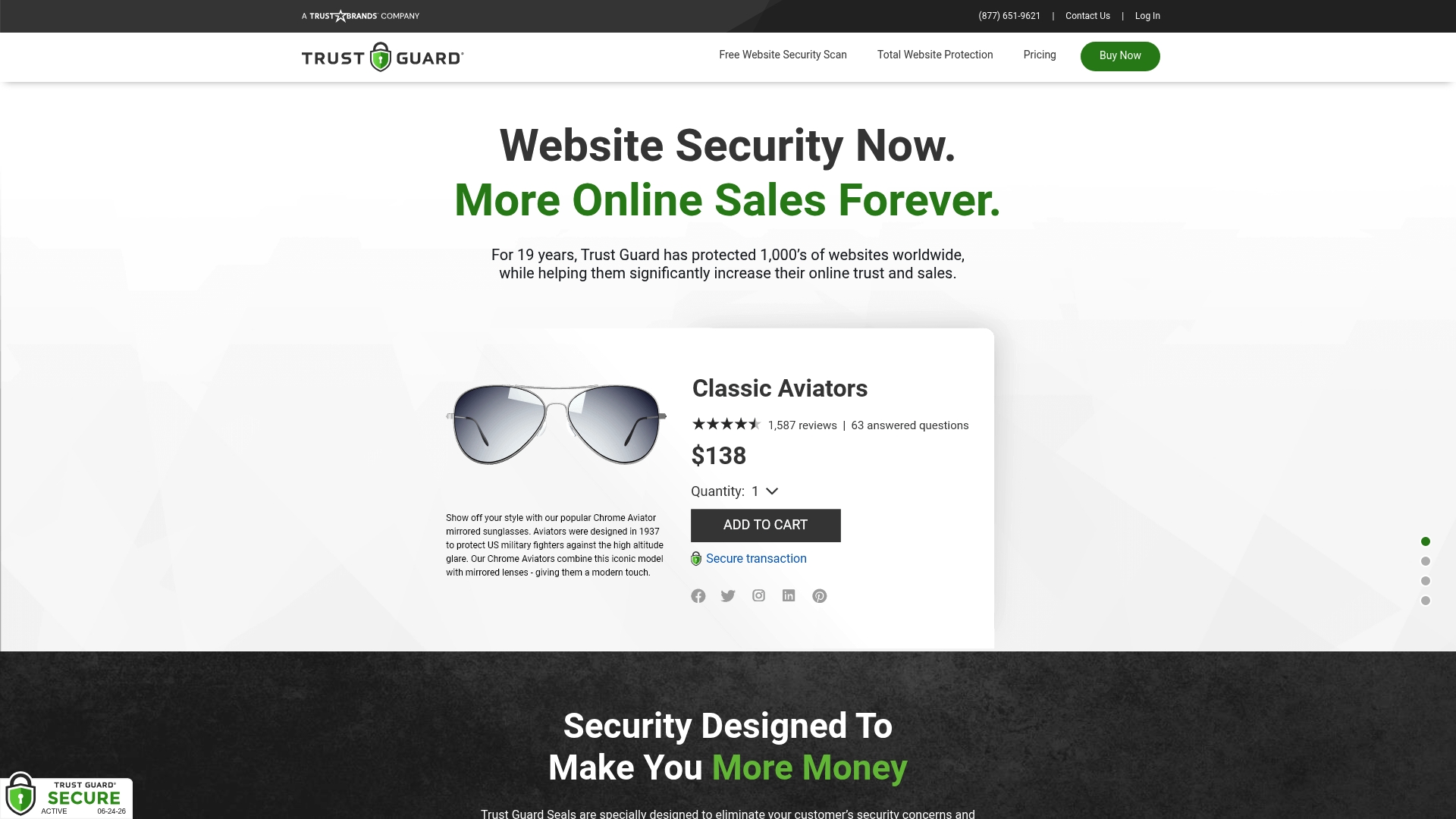
Trust Guard reports more than 15 years in operation and says it protects thousands of websites worldwide. The Total Website Protection plan starts at $97 per month and bundles security scans with visible trust seals. The product aims at small to medium ecommerce sites that need PCI scanning and customer-facing trust signals.
Core Features
Trust Guard runs external PCI scanning, internal malware heuristic scans, and SSL certificate validation to identify common vulnerabilities. The service also supplies customizable trust seals that display on public pages and a mobile app for on the go security management. The vendor offers cyber insurance options through third party partners as part of its broader protection mix.
Key Differentiator
The main distinction is the pairing of customizable trust seals with active scanning and compliance checks. According to the company, that combination increases conversions by making security signals visible to shoppers. The approach treats trust indicators as a conversion tool as well as a security control.
Pros
Proven longevity and a focused feature set make Trust Guard straightforward for small teams to deploy and manage. Included external PCI scans, malware heuristics, and SSL checks address common compliance and vulnerability needs for ecommerce sites. Clear pricing starting at $97 per month simplifies budgeting, and the mobile app helps owners manage alerts and seals without sitting at a desktop.
Cons
- Some third party reviews say the interface feels overly simplified and offers limited seal customization.
- The product listing does not describe integrations with CMS platforms or existing security stacks.
- Marketing materials do not present in depth feature comparisons versus competitors.
When It May Not Fit
If your site requires deep integration with a content management system or a security information and event management tool, this product may fall short. Large or highly specialized websites that need advanced seal customization or bespoke workflows will likely need a different solution. Teams that require an extensive integration catalog should look elsewhere.
Who It's For
Trust Guard fits small to medium online business owners and managers who want visible trust signals plus basic vulnerability scanning. It suits ecommerce operators focused on PCI compliance and reducing cart abandonment with clear, customer facing seals. It also fits teams that prefer a single vendor for scans and seal display rather than assembling multiple tools.
Real World Use Case
A small ecommerce store enables Trust Guard scans and places trust seals on product and checkout pages. The store uses the vendor reported PCI scanning to check compliance and schedules regular malware heuristics. The vendor links this configuration to lower cart abandonment and safer handling of customer payment data.
Pricing
Total Website Protection starts at $97/month and includes external PCI scans, internal malware heuristic scans, SSL validation, and customizable trust seals. That price point targets small to medium businesses seeking a packaged security and trust signal solution. Detailed enterprise pricing is not listed publicly.
Website: https://trustguard.com
Truly Legit
At a Glance
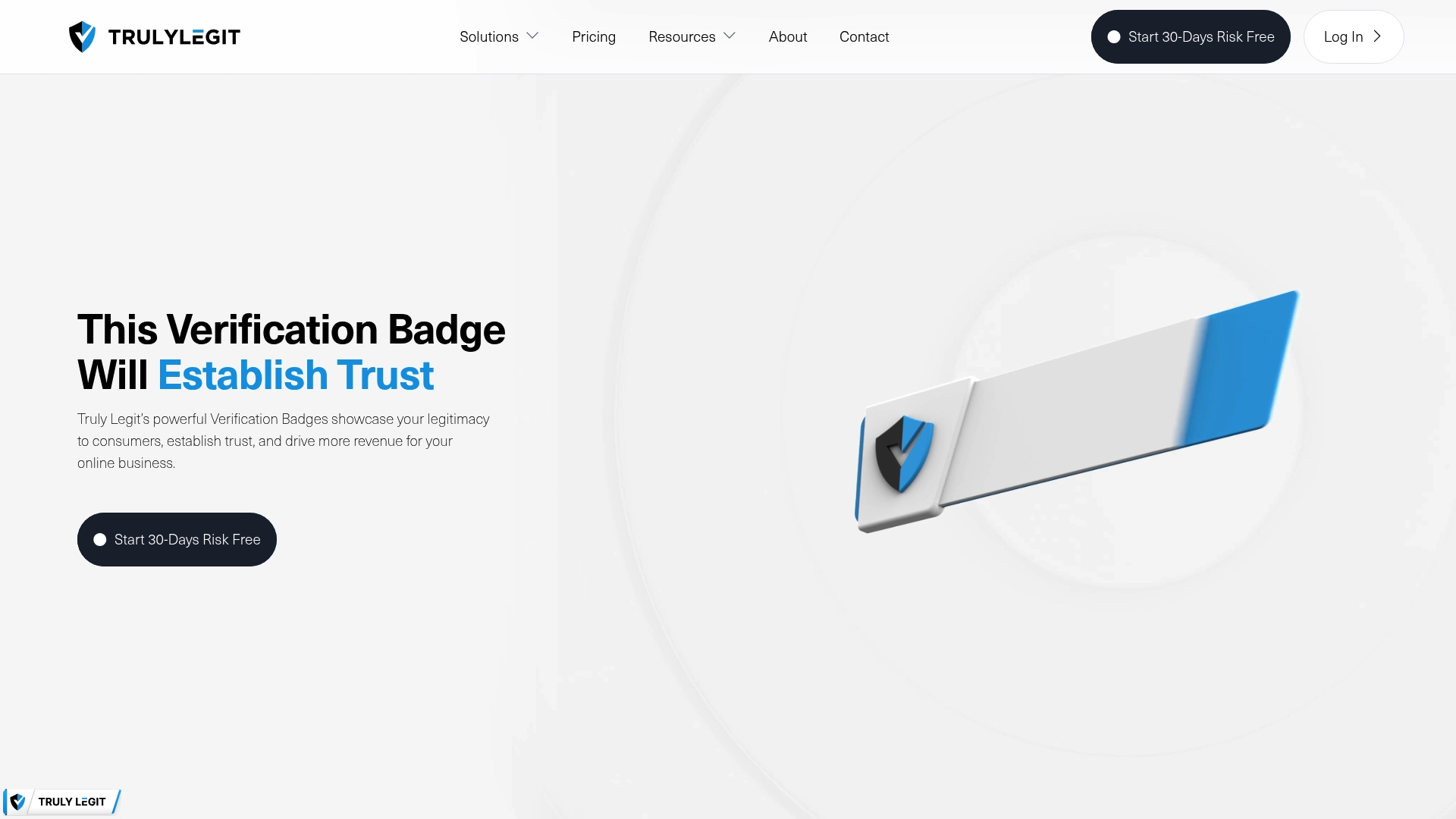
The vendor advertises a 30 day risk free trial to let merchants test badge impact on buyer confidence. Truly Legit centers on visible trust marks and basic site analytics to show legitimacy to shoppers. According to the company, it is trusted by global companies.
Core Features
The core offering is a visual Verification Badges system that sites can display on storefronts and product pages. The platform pairs those badges with website analytics that track visits and badge interactions to gauge shopper response. Verification services are listed as part of the package, but the public site does not describe the standards used for checks.
Key Differentiator
The single standout feature is the visual badge system that immediately signals legitimacy to a shopper during browsing. Badges act as an on page cue that can reduce scam suspicion without changing product copy. That visible signal fits small stores that need a quick way to present trust.
Pros
That trust claim from large clients provides a marketing advantage when showing badges on a public site. The 30 day risk free trial gives shops time to measure whether badges move the needle on conversion. Visual badges combined with analytics create a simple workflow for smaller teams to test trust signals without a major rollout.
Cons
- No published verification methods. The site does not list standards or certification levels users can inspect.
- Pricing and ongoing costs are unclear. Public pages lack detailed fee structures for long term use.
- Parts of the website return a 404 error. That raises questions about onboarding and documentation quality.
When It May Not Fit
Brands that must show documented certification levels for marketplaces or regulators will likely need a provider with public audit trails. Teams that require polished onboarding and clear developer documentation may find the reported site errors and sparse details frustrating. Large enterprises needing granular verification logs should look for a vendor with clearer published standards.
Who It's For
Online business owners and e commerce platforms that want a quick visual way to demonstrate authenticity will find this approach useful. Small stores testing trust signals against ad or email campaigns will appreciate the trial period. Organizations that need formal certification, extensive documentation, or enterprise grade reporting will want to compare other options.
Real World Use Case
A mid sized online boutique adds Truly Legit badges to product pages and its checkout flow to reduce hesitation on unfamiliar buyers. The team watches analytics for badge clicks and conversion lift during the 30 day risk free trial. If engagement rises, they keep the badge; if not, they remove it without a long term commitment.
Website: https://trulylegit.com
Comparison of alternatives
When selecting a service to evaluate website trustworthiness, understanding the distinguishing features of each option is crucial for informed decision-making. Below, we compare Verified fyi, Trust Guard, and Truly Legit to help you identify the most suitable solution for your needs.
Feature transparency and reporting
Verified fyi leads in providing transparency regarding its evaluations. The service cross-references over 200 signals from reputable sources like Google Safe Browsing and VirusTotal, clearly displaying the elements that influence a site's trustworthiness score. This direct insight enables users to make more confident decisions based on detailed evidence rather than opaque metrics. Neither Trust Guard nor Truly Legit offers the same depth of signal-level breakdowns in their respective evaluations.
Focused security tools
Trust Guard excels in offering security scanning paired with visual trust seals. It includes external PCI compliance scans, malware defense mechanisms, and SSL validation, making it a preferred option for e-commerce sites aiming to meet regulatory requirements. In contrast, while Verified fyi emphasizes broad transparency, it lacks these dedicated security compliance features. Truly Legit, while offering badges and basic analytics, does not detail similar thorough security checks in its public descriptions.
Tailored solutions and trials
Truly Legit provides a notable advantage through its 30-day risk-free trial period, allowing businesses to experiment with visual badges to gauge their impact on conversion rates without significant financial commitment. The accessible trial period appeals particularly to new entrepreneurs testing their market strategies. However, its limited description of verification standards and intermittent errors may concern users seeking a polished, reliable service.
Best fit
- Users seeking a quick, transparent, and free evaluation should consider Verified fyi for its rich signal-based scores.
- E-commerce businesses aiming to achieve PCI compliance and improve customer confidence through visual seals can benefit from Trust Guard’s security and compliance tools.
- Entrepreneurs exploring the efficacy of visual credibility indicators will appreciate Truly Legit’s trial model for measuring their impact.
Our pick
When prioritizing detailed transparency and ease of access in evaluating online trustworthiness, Verified fyi emerges as the strongest contender. It outshines competitors by explaining its trust scores with source-level clarity, helping users understand the findings comprehensively. However, for entities requiring intensive security checks or exploring specific badging systems, Trust Guard or Truly Legit may serve better based on those unique requirements.
When deciding on the best website safety scanner, comparing transparency and features helps identify the tool that aligns with your needs.
| Product | Core Features | Key Differentiator | Pricing | Notable Limitation |
|---|---|---|---|---|
| Verified fyi | Real-time checks, trust badges, signal explanations | Transparent multi-source score breakdown | Free | Relies heavily on public signals |
| Trust Guard | PCI scans, malware heuristics, customizable seals | Combines scans with visible trust seals | Starting at $97/month | Limited integrations with CMS platforms |
| Truly Legit | Verification badges, analytics, shopper response | Immediate legitimacy signal to shoppers | Price not published | Unclear verification standards, site errors |
How Can You Verify Website Safety Beyond epihq.com Alternatives?
When you're vetting unfamiliar websites, clarity and evidence matter most. Verified fyi analyzes over 200 public security and reputation signals to produce a clear trust score from 0 to 100. This score reveals red flags like malware, phishing, or poor reputations that might not appear on single data sources. Verified fyi's transparent breakdown helps small business owners, online shoppers, and content creators understand exactly what affects site safety.
Try Verified fyi’s free service to paste and check any URL instantly. You can also add trust badges on your checkout pages to reassure customers, reducing hesitation during payment. Visit Verified.fyi to get a full picture of website legitimacy and make safer decisions before you engage.
Verified.fyi offers an easy way to measure trustworthiness without guesswork or confusing reports. If you want a reliable safety check beyond other epihq.com alternatives, start evaluating sites now with Verified fyi and see every signal that counts.
FAQ
What features does Verified fyi offer for website safety scanning?
Verified fyi analyzes over 200 signals to generate a trust score on a 0 to 100 scale. It cross-references public sources such as Google Safe Browsing and VirusTotal, allowing users to understand the factors influencing a site's safety. This comprehensive analysis helps you make informed decisions before visiting unfamiliar websites.
How does Verified fyi compare to Trust Guard?
Trust Guard provides external PCI scanning, internal malware heuristic scans, and customizable trust seals, making it a strong choice for e-commerce sites needing compliance checks. Verified fyi, however, focuses on generating a detailed breakdown of public signals that influence trust scores, catering better to users seeking clarity on website legitimacy without needing extensive security features.
Can I use Verified fyi for quick scans without signing up?
Yes, Verified fyi does not require sign-up, allowing users to instantly access its website safety scanner. This feature makes it convenient for anyone needing a quick check before clicking on links.
What issues might I encounter when using Verified fyi?
While Verified fyi effectively cross-references public signals, it may miss subtle ownership ties or recent changes not yet reflected in those sources. Users should be aware of these limitations when relying solely on its findings.
How quickly can I receive results from Verified fyi?
Verified fyi provides real-time checks, delivering results almost instantly. This speed allows users to quickly assess websites before engaging with them, enhancing online safety.