Temu is a legitimate marketplace: payments are generally safe, privacy concerns are unresolved in court, and product safety depends on what you buy. Purchase Protection covers most orders, and standard encryption handles your card data the same way any major retailer would. But data collection practices are the subject of active lawsuits, and certain product categories carry real risk you should know about before you click "buy."
- Payments: Protected by HTTPS/TLS encryption and PCI DSS standards, plus a 90-day Purchase Protection window.
- Privacy: Contested — multiple state attorneys general have sued over data practices, with no final ruling yet.
- Product safety: Varies by category. Household basics are low risk; electronics and kids' items need extra scrutiny.
Read on for a step-by-step checklist that covers account setup, payment tricks, and how to spot a fake Temu site before it costs you money.
Key Takeaways
Temu's payment system meets standard e-commerce security benchmarks, but privacy practices remain under active legal dispute and product safety depends entirely on category.
| Point | Details |
|---|---|
| Payments are protected | HTTPS/TLS encryption and PCI DSS compliance apply, plus a 90-day Purchase Protection window for eligible claims. |
| Privacy remains unresolved | State AG lawsuits allege covert tracking; no final ruling exists yet, so treat claims as pending, not proven. |
| Product risk varies by category | Household basics are low risk; electronics and children's items need extra scrutiny before you buy. |
| Scams target the brand name | Typosquatted domains and phishing texts impersonate Temu; verify URLs and sender domains before clicking. |
| Verify before you buy | Verified fyi scores any unfamiliar site or seller URL on 200+ signals so you can check before you check out. |
Table of Contents
- Is Temu Safe? Understanding How the Marketplace Works
- Is Temu a Trustworthy Site or Just a Controversial One?
- How Safe Is It to Pay With a Credit Card on Temu?
- What Does Temu Do With Your Data, and Should You Worry?
- Which Products Are Riskiest to Buy on Temu?
- How Do You Spot a Fake Temu Site or Scam?
- A Practical Checklist for Shopping Safely on Temu
- How Do You Verify a Site Like Temu Before You Buy?
- Is Temu Safe? The Bottom Line for Shoppers
- My Take: Value Shopping Requires Active Homework
- Check Any Site's Trust Score Before You Checkout
- Sources
- FAQ
Is Temu Safe? Understanding How the Marketplace Works
Temu isn't a single retailer stocking its own warehouse. It's a marketplace connecting you to thousands of third-party sellers, most shipping directly from manufacturers, primarily in China. That's the entire business model, and it explains almost everything else about the shopping experience.
- Sellers list products directly; Temu takes a cut and handles the platform, payments, and logistics.
- Orders often ship from the factory or a regional warehouse, which is why delivery windows run one to two weeks.
- Cutting out traditional retail markups is how prices stay low, but it also means less quality control layered on top of what the manufacturer already does.
Temu is owned by PDD Holdings, a Nasdaq-listed company that also operates Pinduoduo in China. PDD Holdings files regular disclosures with the SEC, which is one reason Temu isn't a fly-by-night operation. It's a fast-growing subsidiary of a public company with real financial reporting obligations.
Is Temu a Trustworthy Site or Just a Controversial One?
There's a real difference between "legitimate" and "controversial," and Temu is both. PDD Holdings' SEC filings confirm a genuine corporate structure behind the app, and Temu still shows up in the Apple App Store and Google Play without removal, alongside routine third-party mobile security assessments.
- Temu has grown into one of the most downloaded shopping apps worldwide since its 2022 launch, which is exactly why disputes over its practices carry weight.
- Several state attorneys general, including Texas, have filed lawsuits alleging deceptive marketing and unlawful data collection.
- The House Select Committee on the CCP has raised supply-chain concerns tied to forced-labor risk across marketplaces including Temu.
None of that means Temu is a scam. It means the company is large, profitable, and currently answering to regulators in multiple jurisdictions at once. Both things are true at the same time.
How Safe Is It to Pay With a Credit Card on Temu?
Your card data isn't the weak point here. Temu's checkout runs over standard HTTPS/TLS encryption, and its payment processing follows PCI DSS compliance, the same baseline standard used by Amazon, Target, and every other major online retailer. That doesn't mean fraud is impossible, but it does mean the checkout page itself isn't a special risk compared to other big platforms, according to Panda Security's analysis.
- Temu's Purchase Protection covers eligible orders that arrive damaged, wrong, or not at all, usually within a 90-day window from purchase.
- File a claim directly through the app first; most refund requests resolve faster there than through your bank.
- Reserve a chargeback for cases where Temu's own dispute process stalls or denies a legitimate claim, since chargebacks take longer and can flag your account.
- Check your statement weekly for the first month after any Temu order, especially if you saved your card for repeat purchases.
Pro Tip: Use a virtual card number through your bank or a service like Privacy.com for your first Temu order. If anything looks off, you can kill that card number without touching your real account. Learn more about verifying payment security before you check out anywhere unfamiliar.
What Does Temu Do With Your Data, and Should You Worry?
This is the messiest part of the safety question, and pretending otherwise would be dishonest. Multiple state attorneys general have alleged Temu engages in covert tracking, including claims that its in-app browser collects more data than disclosed. A class-action complaint makes similar allegations about undisclosed data transmission from Temu's in-app browser.
At the same time, technical reporting from Ars Technica found that early "spyware" claims rested on code analysis that suggested the app could behave dynamically, not confirmed evidence of active spying in production. That gap between "the code could theoretically do this" and "the app is actually doing this" is exactly why the lawsuits remain unresolved rather than settled fact.
Independent security vendors and privacy researchers don't agree on how invasive Temu's data collection actually is. Some comparative studies place it among less aggressive shopping apps; others flag specific behaviors as concerning. The disagreement itself is the story, and it's why courts, not marketing claims, will ultimately decide the record here.
A few things are worth holding onto amid the noise:
- No confirmed public data breach involving Temu has been reported as of these lawsuits' filing dates, but discovery in ongoing litigation could surface new evidence.
- The FTC and state AGs are examining allegations, not issuing final rulings, so treat headlines as claims under investigation rather than proven fact.
- If you're privacy-conscious, using Temu's mobile website in a browser rather than the app limits the permissions you're granting altogether.
- Reviewing and revoking unnecessary app permissions, especially location, contacts, and background data, cuts your exposure regardless of how the lawsuits resolve.
If the legal uncertainty bothers you more than the discount excites you, that's a reasonable line to draw. Nobody should feel obligated to accept unresolved privacy risk for a $6 phone case.
Which Products Are Riskiest to Buy on Temu?
Not all Temu purchases carry equal risk, and that distinction matters more than any blanket safety verdict. A phone case failing doesn't hurt anyone. A phone charger that overheats can start a fire.
- Marketplace sellers vary wildly in quality control, and Temu's vetting can't fully substitute for the certifications a dedicated retailer might require.
- Electronics, especially chargers, power banks, and anything plugging into a wall outlet, deserve extra scrutiny since counterfeit or uncertified units pose real fire and shock risks.
- Children's items, particularly toys with small parts or products meant for infants, carry the same concern: safety certifications aren't always verifiable from a product listing alone.
- Consumer Reports has engaged directly with Temu on marketplace safety, securing commitments to improve product-safety gaps its testing identified.
Import inspection changes in 2025 also reshaped the landscape for US shoppers, with tighter customs scrutiny on low-value shipments increasing both delivery times and the odds that questionable products get flagged before they reach your door. If something you ordered fails a basic safety check on arrival, don't just toss it. Photograph it, file a Purchase Protection claim immediately, and request a refund rather than a replacement of the same item.
How Do You Spot a Fake Temu Site or Scam?
Temu's popularity has made it a magnet for impersonators. Most scams follow a predictable pattern, and once you know the pattern, they're easy to catch.
- Check the domain carefully. Typosquatted sites like "temu-shop-deals.com" or "temuoffers.net" mimic the real site; the legitimate domain is simply temu.com.
- Distrust urgency in emails or texts. A message claiming your "Temu order is on hold, click here in 30 minutes" is a phishing attempt, not real customer service.
- Match the sender domain. Legitimate Temu emails come from temu.com addresses, never a lookalike or generic Gmail account.
- Watch for brushing scams. If you receive a package you never ordered, someone is using your address to fake a verified review; don't scan any QR code included in the box, and report it through Temu's support.
- Confirm support channels inside the app. Real Temu support never asks for your password or a wire transfer to "release" a shipment.
Pro Tip: Before clicking any link claiming to be from Temu, hover over it (or long-press on mobile) to preview the actual URL. If it doesn't end in temu.com, don't tap it. Our guide to phishing warning signs breaks down more red flags worth memorizing.
A Practical Checklist for Shopping Safely on Temu
You don't need to overhaul your entire online life to shop on Temu responsibly. You need about ten minutes of setup and a habit of checking a few things before you hit "place order."
Start with your account. Use an email address you don't use for banking or anything sensitive, pair it with a unique password (not one recycled from another site), and turn on two-factor authentication if Temu offers it for your account type. This limits the blast radius if your Temu login ever gets compromised in a broader breach unrelated to the platform itself.

Handle payment deliberately. A virtual card number, whether from your bank or a dedicated service, keeps your real card number out of any transaction. If a virtual card isn't available to you, use a credit card rather than a debit card. Credit cards give you stronger fraud protections and dispute rights under federal law, a distinction worth understanding through resources like this explainer on credit card fraud protections. Check your statement within a few days of ordering, not weeks later.

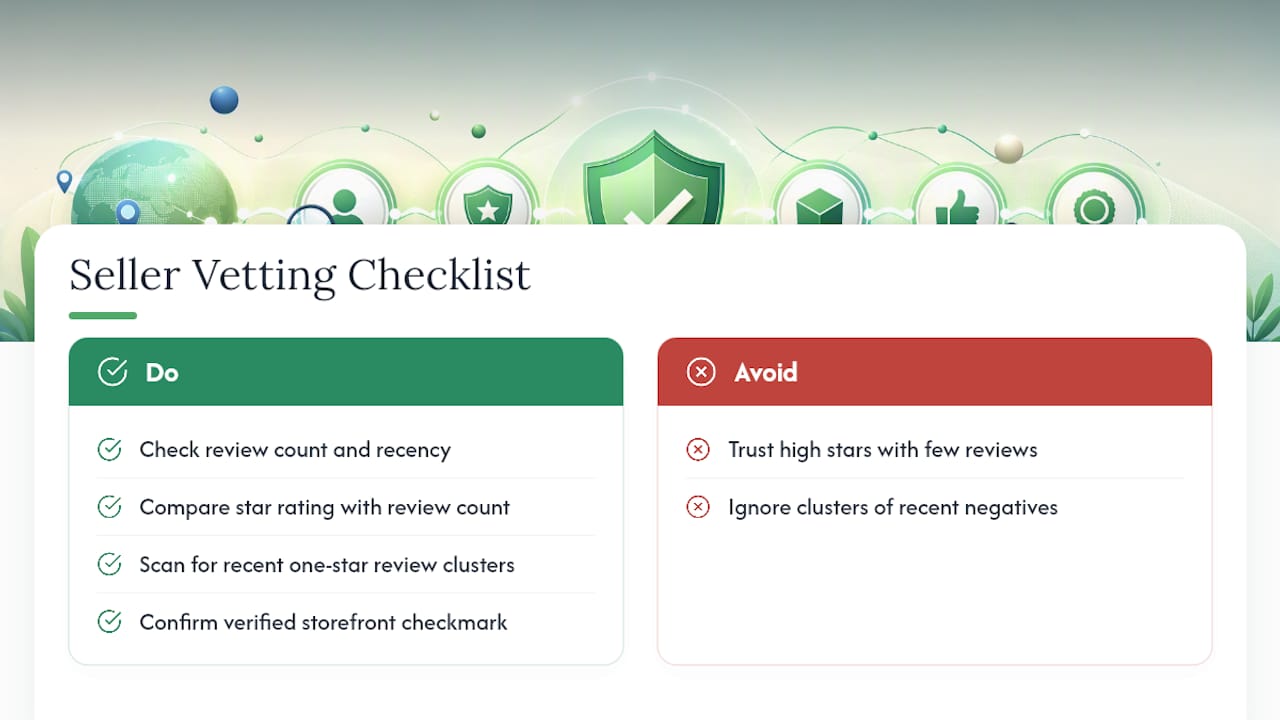
Vet the seller, not just the product. Look past the star rating to the review count and recency. A product with 4.8 stars and only 12 reviews tells you far less than one with 4.3 stars and 3,000. Scan for a cluster of recent one-star reviews describing the same problem, that's a stronger signal than the overall average. Brands with verified checkmarks on their storefronts have generally passed additional vetting.
Document everything after you order. Note your expected delivery window, and if it slips more than a few days past the estimate, check tracking before assuming the worst. If a product arrives damaged, defective, or not as described, photograph it immediately and open a Purchase Protection claim within the eligible window rather than waiting to see if the problem resolves itself.
Pro Tip: Keep a simple habit: screenshot the product listing and price at checkout. If a dispute arises later, having proof of exactly what you were promised speeds up every resolution process, whether through Temu or your card issuer.
How Do You Verify a Site Like Temu Before You Buy?
You don't have to take any single article's word for a platform's trustworthiness, and you shouldn't. A handful of technical checks tell you more than a gut feeling ever will: does the site use HTTPS with a valid, reasonably aged certificate, does its WHOIS registration match what you'd expect for a company its size, and does it appear on any known-malware or phishing blocklists?
- Cross-reference reputation signals beyond the storefront itself: Better Business Bureau complaints, Consumer Reports coverage, and any pending class-action notices tied to the brand.
- Automated tools can process far more signals than a person can check by hand in a reasonable amount of time.
This is exactly the gap Verified fills. It pulls together more than 200 security, ownership, reputation, and compliance signals, everything from certificate details to WHOIS records to public complaint history, and distills them into a single 0 to 100 trust score with a plain-language breakdown. That score is a strong starting point, not a final word. Combine it with your own judgment about the specific product category and price point before you commit.
Is Temu Safe? The Bottom Line for Shoppers
Payments: safe, backed by standard encryption and Purchase Protection. Privacy: contested, with lawsuits still working through the courts. Product safety: it depends entirely on what's in your cart.
- Low-cost, non-safety-critical items (phone cases, décor, craft supplies) carry minimal downside if something goes wrong.
- High-value electronics, safety-rated equipment, and children's products deserve either extra research or a different retailer entirely.
- Use Purchase Protection proactively, and run any unfamiliar seller or lookalike site through a verification check before you type in your card number.
Temu isn't a trap, but it isn't a retailer to shop on autopilot, either.
My Take: Value Shopping Requires Active Homework
Cheap products aren't inherently dangerous, and expensive skepticism isn't inherently wise. The mistake I see shoppers make with Temu isn't buying from it. It's buying from it the same mindless way they'd buy from a retailer with decades of established trust and a name-brand return desk behind it.
Run the ten-minute checklist. Skip the phone chargers. Check unfamiliar sellers before you trust them with your money.
— Nick
Check Any Site's Trust Score Before You Checkout
Reading about red flags is useful right up until you're staring at an actual product listing at 11 p.m., wondering if that seller is legitimate. That's the moment a quick trust check earns its keep, and it takes less time than reading one more review thread.

Verified fyi analyzes more than 200 security, ownership, and reputation signals, everything from HTTPS certificates to WHOIS records to public complaint history, and turns it into a single 0 to 100 score with a plain breakdown of what's driving it. Paste in a seller's storefront link, a suspicious email domain, or any site you're unsure about, and get a categorized verdict in seconds rather than digging through forums yourself. If you want to see how the scoring actually works before you rely on it, the methodology behind the score walks through exactly which signals count and why. Next time a deal looks a little too perfect, run the URL through Verified fyi before your card details do.
Sources
- SEC filing — PDD Holdings
- Texas Attorney General press release — Temu lawsuit
- House Select Committee interim findings
- Statista — Temu app downloads
FAQ
Is Temu a Trustworthy Site to Shop On?
Temu is legitimately owned by publicly traded PDD Holdings and operates standard payment security, but it faces active state lawsuits over data practices, so trustworthiness depends on which risk (payment, privacy, or product) you're asking about.
Is It Safe to Use My Credit Card on Temu?
Yes, Temu's checkout uses HTTPS/TLS encryption and PCI DSS-compliant payment processing, the same baseline standards used by major US retailers, though using a virtual card number adds an extra layer of protection.
What Are the Main Risks of Shopping on Temu?
The three main risks are unresolved privacy and data-collection concerns tied to ongoing lawsuits, variable product quality from third-party sellers, and impersonation scams using fake Temu-branded sites or texts.
What Should You Avoid Buying on Temu?
Avoid electronics like chargers and power banks, along with children's products and safety-rated equipment, since these categories depend on certifications that marketplace listings can't always verify.
How Can You Verify If a Temu Seller or Link Is Legitimate?
Check that the URL matches temu.com exactly, review seller ratings and recent complaint patterns, and run unfamiliar links through a site-verification tool like Verified fyi before entering any payment information.