A clone shopping site is a fake online store built to look like a real, trusted retailer, copying its logo, layout, and product photos to trick you into paying or handing over personal data. The moment something feels off, a mismatched price, an odd domain, an unfamiliar checkout page, stop before you enter card details. Run the URL through a site checker first, then decide.
TL;DR:
- Most clone shopping sites can be identified by near-identical branding, significantly lower prices, and copied product descriptions from legitimate retailers.
- Automated tools can now generate convincing clones in minutes, frequently on new or short-lived domains that are quickly abandoned or reuploaded under different URLs.
- Before purchasing, check the URL carefully, verify contact information and compare prices, and use verification tools to assess site trustworthiness rather than relying solely on visual inspection.
- Acting quickly after payment is crucial, including requesting chargebacks, changing passwords, and reporting to authorities, as clones often do not ship any products or deliver counterfeit goods.
- Automated verification tools, like trust scores based on WHOIS, Safe Browsing, and hosting data, are essential for spotting increasingly sophisticated fake sites in real time.
Table of Contents
- What Counts as a Clone Shopping Site (And What Doesn't)
- How Scammers Build and Run These Sites
- The Two-Minute Checklist Before You Buy
- Already Paid or Entered Your Details? Act in This Order
- Why Manual Checks Aren't Enough Anymore
- Is Cloning a Shopping Site Illegal? What You Can Do
- Why We Keep Pushing Verification Before Payment
- Check Any Store Before You Check Out
- Where to Report and Learn More
- Sources
- FAQ
What Counts as a Clone Shopping Site (And What Doesn't)
A true clone shopping site copies far more than a logo. It replicates entire product pages, category menus, and checkout flows so closely that the fake becomes hard to distinguish from the real thing without a close look. That's different from a generic scam landing page, which usually looks cheap and thrown together, with mismatched fonts and a single "buy now" button.
Clones exist for three main reasons: to steal your payment information, to harvest login credentials you might reuse elsewhere, or to collect money for counterfeit goods that either never ship or arrive as cheap knockoffs.
A $220 jacket suddenly listed at $89 on a site you've never heard of isn't a bargain. It's usually the tell.
- Near-identical branding, logos, and product photography
- Checkout pages styled to mimic the real retailer
- Prices well below the original brand's listed range
- Product descriptions copied word-for-word from the legitimate site
How Scammers Build and Run These Sites
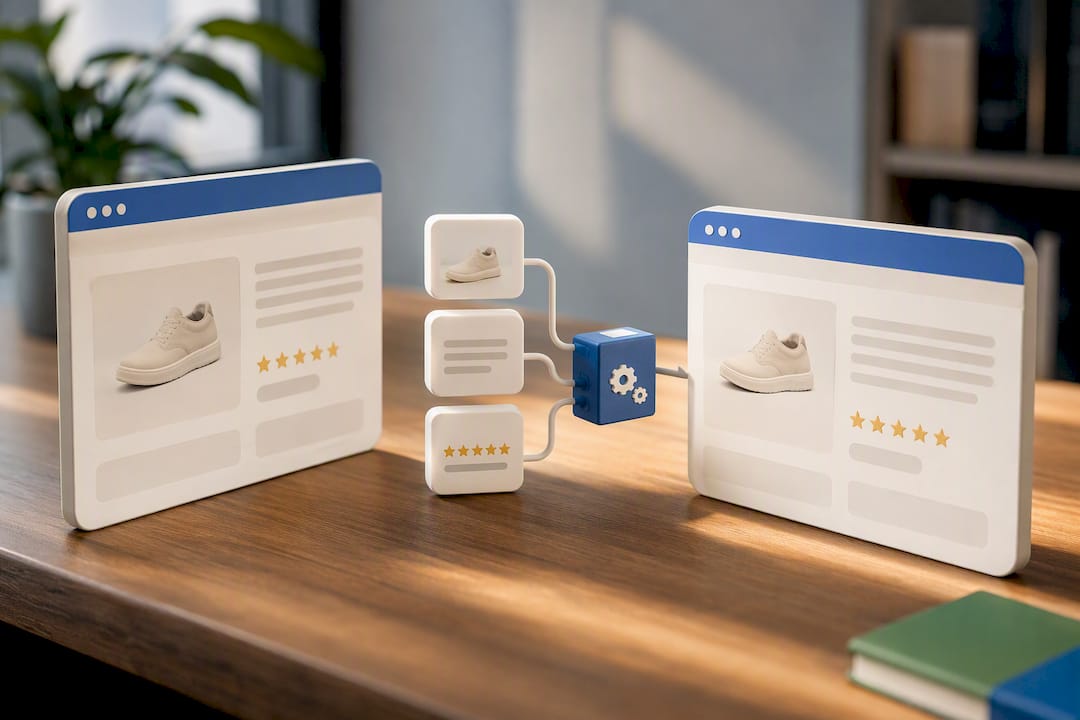
Clone shopping sites used to take real effort to build. That's no longer true. Automated web builders and AI tools can now generate a near-identical storefront in roughly five minutes, pulling images, product copy, and even review widgets straight from the legitimate brand's site.
Global impersonation domains have grown significantly since 2019, reaching over a million by 2024 Chargeflow research., according to Chargeflow's research on look-alike fraud. That pace tracks directly with how cheap and fast it's become to spin up a convincing fake.
The operational playbook tends to follow a pattern:
- Register a lookalike domain (a swapped letter, an extra word, or an unusual suffix)
- Scrape product images, logos, and reviews from the real retailer
- Drive traffic through paid social ads rather than organic search, since a brand-new domain has no ranking history
- Host on overseas servers or short-lived domains that get abandoned and rebuilt before takedown requests even process
That last point matters for you as a shopper. Even if a site gets reported and pulled down, the same operator can be running an identical clone under a new domain within days. AI-driven site generation is also reshaping legitimate ecommerce and SEO practices, which is part of why the line between a real fast-moving store and a fake one has gotten blurrier.
The Two-Minute Checklist Before You Buy
Run through these checks before you enter any payment information on a store you don't already know and trust.
- Read the URL character by character. Look for swapped letters, extra hyphens, an unfamiliar subdomain, or a country-code ending that doesn't match where the brand actually operates.
- Search for a physical address, phone number, and return policy. Legitimate retailers list this information; clones often skip it or copy it verbatim from the real brand without matching contact details.
- Compare prices against the official site. If the same product is 50% cheaper with no sale explanation, treat that as a warning sign, not a lucky find.
- Check the checkout flow before submitting payment. A tokenized processor like Stripe or PayPal is safer than a bare form asking for your card number directly on the page. Clone sites frequently capture card data through a form that isn't actually tied to a legitimate merchant account, so the checkout can look functional while doing nothing but harvesting your details.
- Paste the domain into a site verification tool or search "[site name] scam" or "[site name] reviews" before paying.
- Be extra cautious if you landed there from an ad. Social ads are the primary distribution channel for clone sites because a new domain has no search ranking to rely on.
Pro Tip: Open the return policy page and the "About Us" page side by side. Clones often copy one but forget to update the other, so you'll spot inconsistent company names or leftover placeholder text.
For a longer procedural walkthrough, Verified fyi's safe online shopping checklist covers additional steps worth bookmarking before your next purchase from an unfamiliar store.
Already Paid or Entered Your Details? Act in This Order
Speed matters here more than almost anywhere else in consumer fraud. Follow these steps in order.
- Call your bank or card issuer immediately and request a block or chargeback. Clone sites typically take payment and never ship, and recovering funds depends heavily on how fast the chargeback process starts.
- Change any password you reused on that fake checkout, and turn on multi-factor authentication for your email and banking accounts.
- Save evidence: screenshots of the product page, the checkout screen, your confirmation email, the exact URL, and the ad or link that led you there.
- File a report with IC3 for the cybercrime angle and a separate complaint with the FTC. Also notify the brand being impersonated so it can pursue a takedown.
- Watch your accounts closely for weeks afterward, and consider placing a fraud alert on your credit file if you shared personal identification details, not just card numbers.
Why Manual Checks Aren't Enough Anymore
Checking a site by eye used to work when clones were rare and clumsy. That era is over. With over a million impersonation-style domains active globally, no shopper can manually vet every unfamiliar store before buying, and experts increasingly point to automated, multi-signal monitoring as the only realistic way to keep pace.
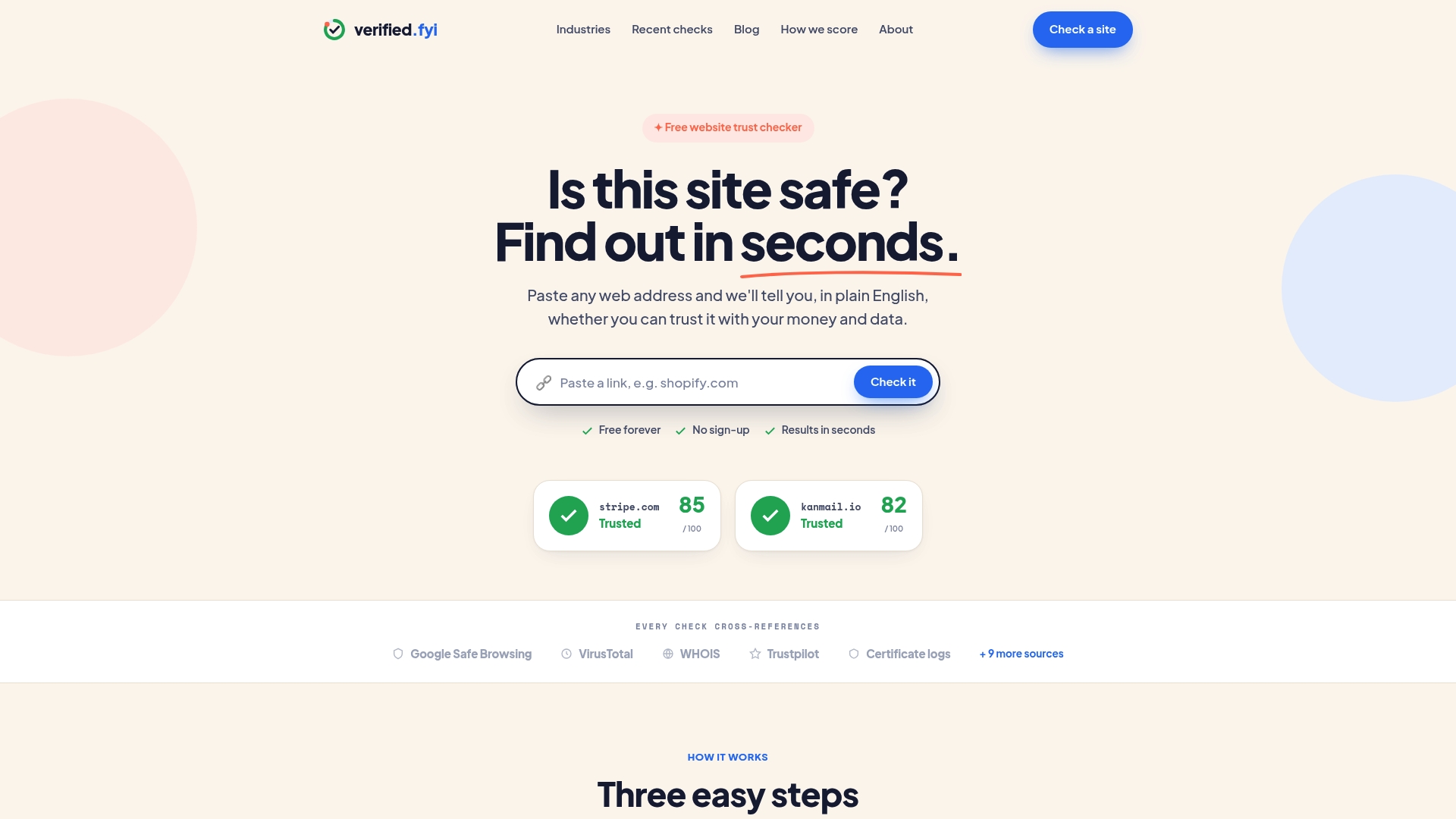
This is where a tool like Verified fyi earns its place in your routine. It pulls over 200 signals, WHOIS registration data, Google Safe Browsing status, VirusTotal scan results, domain age, hosting patterns, and public reputation data, and compresses them into a single 0 to 100 trust score.
- 0 to 39 (dangerous or suspicious): active red flags across multiple categories
- 40 to 69 (caution): mixed signals worth investigating further
- 70 to 100 (mostly safe to trusted): consistent, established signals across the board
You paste the URL, read the score and the risk breakdown, and follow the guided next step. It's a spot-check, not a guarantee, but it catches what a quick visual scan can't. A professional-looking design and an HTTPS padlock alone don't prove legitimacy; verification requires cross-checking ownership and hosting data that isn't visible on the page itself.
Is Cloning a Shopping Site Illegal? What You Can Do
Cloning a retailer's site typically violates several overlapping laws at once: trademark infringement for the copied branding, copyright for the lifted product photos and text, and outright fraud for the payment theft itself. Whether any single case gets prosecuted depends heavily on jurisdiction, the amount of money involved, and whether the operator can even be identified, since many hide behind overseas hosting and disposable domains.
That doesn't mean reporting is pointless. It builds the record that eventually gets domains and hosting accounts shut down.
- FTC: file a consumer complaint for deceptive advertising or a fraudulent sale
- IC3: report the incident as cybercrime, especially if payment data was stolen
- Domain registrar and hosting provider: most have abuse contact forms for reporting impersonation
- The impersonated brand: notify them directly so they can pursue a DMCA takedown
Realistically, takedowns and refunds move slowly. Your fastest path to getting money back almost always runs through your card issuer, not through any of these reporting channels.
Why We Keep Pushing Verification Before Payment
I've watched the volume of clone sites climb alongside how easy AI tools have made it to spin one up in minutes rather than days. That speed is the whole problem: by the time a clone gets flagged and reported, a new one is often already live under a different domain.
The single habit that actually protects you is boring but effective. Before you pay on any store you haven't used before, paste the URL into a verification tool and read what it finds. It takes less time than typing your card number.
— Nick
Check Any Store Before You Check Out
Running through a mental checklist helps, but a second, automated opinion catches things your eye will miss, like a domain registered three weeks ago or a hosting pattern tied to dozens of other flagged stores. Verified fyi gives you that second opinion in seconds: paste the URL, and you get a 0 to 100 trust score along with a plain-language breakdown of exactly what's driving it.
It fits directly into the checklist covered above. Instead of guessing whether that ad-driven storefront is legitimate, you check it the same way you'd check contact details or compare prices, as one more step before you pay. Browse recently checked sites to see how the scoring plays out on real examples, or head straight to Verified and paste in the URL that's making you second-guess a purchase right now.
Where to Report and Learn More
- FTC: file a consumer complaint about deceptive ads or fraudulent sales
- IC3: report suspected cybercrime and payment theft
- CISA resources: guidance on recognizing and reporting impersonation attacks
- Redpoints' cloning explainer: deeper technical detail on detection and takedown
Sources
- Website cloning: How to detect it, prevent it, and respond
- Look-Alike Fraud: Brand Impersonation Sites Explained (2026)
- Internet Crime Complaint Center (IC3)
- FTC dot-com disclosures guidance
FAQ
Is cloning websites illegal?
Yes, in most cases. Copying a retailer's branding and product content typically violates trademark and copyright law, and the payment theft that follows is fraud, though enforcement depends on jurisdiction and whether the operator can be identified.
Which website is best for checking if a shopping site is a clone?
A multi-signal verification tool like Verified fyi is built for exactly this: paste a URL and get a 0 to 100 trust score based on WHOIS data, Safe Browsing status, and hosting patterns rather than a visual guess.
How do I spot a fake shopping website?
Check the URL for misspellings or odd domain endings, compare prices against the official brand site, and verify the checkout uses a recognized payment processor rather than a bare card form. A dedicated checklist walks through each step in more detail.
How can I check if someone cloned my phone?
That's a separate issue from shopping site clones. Phone cloning involves duplicating a device's identifiers to intercept calls or data, and it's typically detected through your carrier, sudden account access alerts, or unexplained charges, not through a website trust check.
What should I do first if I already paid on a suspected clone site?
Contact your bank or card issuer immediately to request a block or chargeback, since recovery depends heavily on how fast that process starts, then file reports with IC3 and the FTC.