DHgate is a legitimate marketplace, not a scam operation, but it is not uniformly safe. It works best for small, unbranded purchases when you pay on-platform and vet the seller first. Counterfeits, non-delivery, and dispute friction are real and documented risks. Skip it for branded goods, safety-critical items, or anything you can't afford to lose.
TL;DR:
- Only buy small, unbranded items from DHgate and always use on-platform payments with a credit card to retain dispute rights.
- Avoid purchasing branded, luxury, or safety-critical products, especially if the seller pressures off-platform payment methods or requests wire transfers.
- Confirm seller ratings above 95% with substantial transaction history, and scrutinize product images and communication before ordering.
- Track shipments through official couriers, photograph the unboxing process, and keep all packaging until after a dispute window closes.
- Use trusted tools to verify suspicious links or seller sites, and never leave DHgate’s messaging system to prevent common scams like phishing or fake tracking.
Table of Contents
- Who Should Shop On DHgate (and Who Should Walk Away)
- Is DHgate a Real Company? What the Trust Signals Show
- The Scams That Actually Cost DHgate Buyers Money
- How DHgate's Buyer Protection and Dispute Process Actually Works
- Payment Security: Credit Cards, Virtual Cards, and Data Protection
- A Step-by-Step Checklist for Buying Safely on DHgate
- Products and Behaviors to Avoid Entirely
- What Shipping Times and Returns Really Look Like
- How to Quickly Check Any Seller Site Before You Buy
- My Take: The One Habit That Matters More Than the Rest
- Get a Second Opinion Before You Pay a Stranger Online
- Sources
- FAQ
Who Should Shop On DHgate (and Who Should Walk Away)
DHgate rewards experienced bargain hunters and punishes impatient first-timers. If you've sourced from wholesale marketplaces before, know how to read a seller's transaction history, and treat every purchase under $30 as a calculated experiment, you're in the right crowd. If you're buying a gift for someone else, need an item by a specific date, or you're hoping to resell branded merchandise, this platform will cost you more in frustration than you'll save in dollars.
Two safety rules matter more than any other advice in this article: pay with a credit card so you retain chargeback rights, and use DHgate's escrow system rather than any payment method a seller suggests privately. Layer a small test order on top of those two rules, and you've addressed most of what goes wrong on this platform.
Good fit:
- Buyers testing a new product category with a small budget
- Shoppers comfortable waiting several weeks for delivery
- People sourcing generic, unbranded goods (phone cases, craft supplies, basic tools)
Poor fit:
- Anyone buying name-brand electronics, cosmetics, or luxury goods
- Buyers needing guaranteed delivery dates
- Resellers who can't absorb the legal risk of counterfeit inventory
- First-time online shoppers unfamiliar with dispute processes
If you fall into the "poor fit" list, the safest move is not learning DHgate's rules. It's shopping elsewhere.
Is DHgate a Real Company? What the Trust Signals Show
Yes. DHgate is a real, established business, not a fly-by-night storefront. Founded in China in 2004, it operates as a business-to-business and business-to-consumer marketplace connecting mostly Chinese manufacturers and wholesalers with buyers worldwide. DHgate itself doesn't manufacture or ship most products; it hosts third-party sellers the way Amazon or eBay does, which means the platform's legitimacy and any individual seller's reliability are two separate questions.
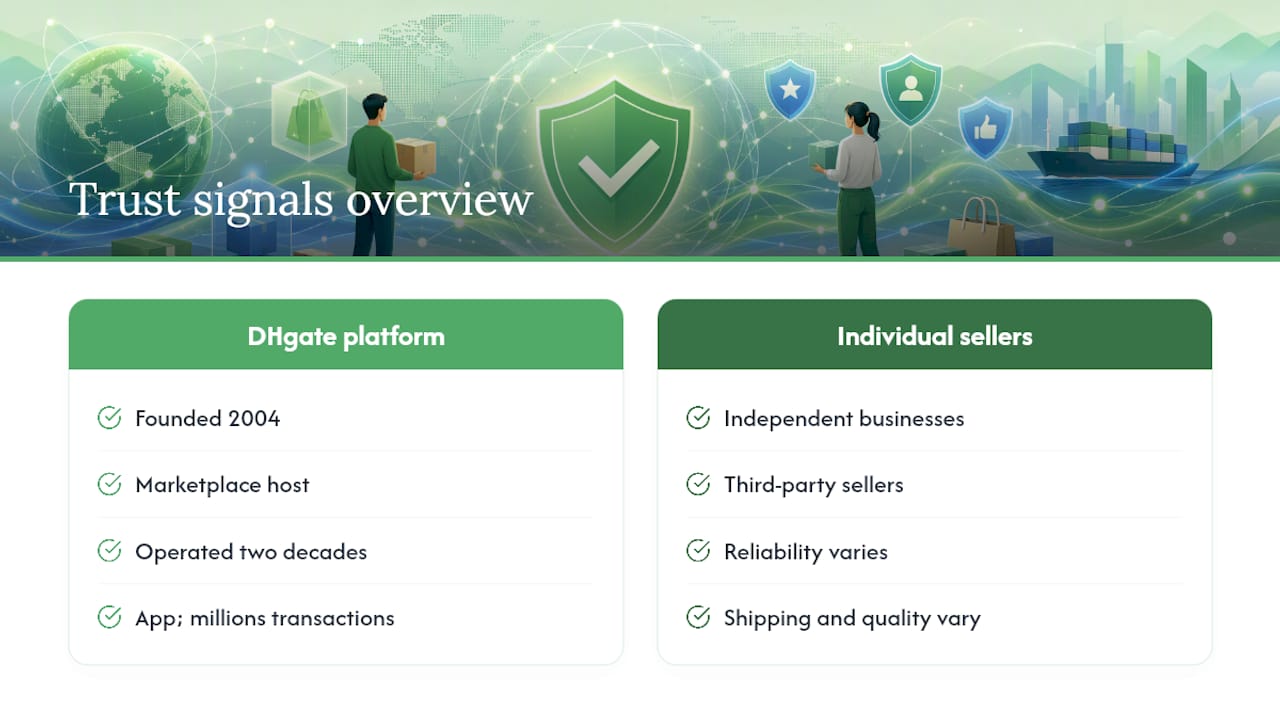
The company has a functioning app on mainstream app stores, processes millions of transactions, and has operated continuously for two decades. That track record rules out the "here today, gone tomorrow" scam pattern common with newer shopping sites.
Review aggregates tell a more complicated story. DHgate's Trustpilot page shows a sharply polarized pattern: tens of thousands of reviews split between satisfied repeat buyers and a large volume of complaints about non-delivery, item quality, and refund delays. That split matters more than an average star rating would. It tells you outcomes depend heavily on which seller you pick, not on the platform as a whole.
Statistic Callout: DHgate has repeatedly appeared on the U.S. Trade Representative's Notorious Markets List, a government report identifying online marketplaces flagged for facilitating counterfeit and pirated goods.
That listing doesn't mean every seller on DHgate sells fakes. It means the government has formally flagged the platform's environment as one where counterfeit risk runs higher than average, which should shape what categories you're willing to buy in. Wired's reporting reaches a similar conclusion: DHgate is real and functional, but seller quality and authenticity vary enough that buyer diligence isn't optional.
The Scams That Actually Cost DHgate Buyers Money
Most DHgate horror stories trace back to one of four patterns, and recognizing them in advance is worth more than any refund policy.
Fake tracking numbers. A seller uploads a tracking number that shows movement for a few days, then goes stale, or belongs to an unrelated package entirely. Buyers who don't check the courier's actual delivery confirmation assume the order is in transit until the escrow window closes and their dispute rights expire.
Off-platform payment pressure. A seller messages you directly asking to complete payment through Western Union, a bank wire, or a personal payment app "to avoid fees." This is the single most damaging scam pattern on the platform. The moment you pay outside DHgate's system, you lose escrow protection, dispute eligibility, and any leverage to get your money back.
Phishing and lookalike domains. Fraudulent emails or texts claiming to be DHgate order updates direct you to a fake login page that harvests your password or payment details. These messages often mimic real DHgate branding closely enough that a quick glance won't catch the fraud. Learning to spot clone shopping sites and phishing warning signs before you click anything in an order email closes this gap fast.
Dispute pitfalls. Some sellers respond to a dispute by offering a partial refund contingent on you closing the case, then never following through, or by flooding the dispute thread with irrelevant messages to run out your evidence window.
- Fake or stale tracking numbers with no real delivery confirmation
- Requests to pay via Western Union, wire transfer, or apps outside DHgate's checkout
- Emails or texts with lookalike DHgate branding requesting login or card details
- Sellers offering "goodwill refunds" in exchange for closing an active dispute
Pro Tip: Never let a seller move the conversation to WhatsApp or personal email before you've paid. Legitimate sellers have no reason to avoid DHgate's own messaging system, and that system is also where your dispute evidence lives if something goes wrong.
How DHgate's Buyer Protection and Dispute Process Actually Works
DHgate holds your payment in escrow rather than releasing it to the seller immediately. The seller only gets paid once you confirm delivery or the order auto-confirms after a set window, typically after a set window from purchase depending on the shipping method selected. That structure is what makes on-platform payment worth insisting on. It's the entire mechanism protecting your money.
If a problem arises, here's how the dispute process generally plays out:
- Open a dispute before auto-confirmation. Once the order auto-confirms, DHgate treats the transaction as complete and your leverage drops sharply.
- Submit evidence immediately. Time-stamped photos, unboxing video, and screenshots of seller messages carry far more weight than a text-only complaint.
- State a clear resolution. Specify whether you want a refund, replacement, or partial credit. Vague complaints slow the process down.
- Escalate within the platform first. DHgate's customer service can intervene when seller and buyer can't agree, but only within the active dispute window.
- Fall back on your card issuer if the platform process fails. A credit card chargeback should be your last resort, not your first move, since it typically requires DHgate's process to have run its course or failed outright.
Documentation quality separates successful disputes from unsuccessful ones. Time-stamped photos and short video showing packaging, item scale, and any serial numbers materially improve refund outcomes compared to a written complaint alone. Keep every piece of packaging until the dispute closes. If you toss the box before checking that everything inside matches the listing, you've thrown away your best evidence.
Payment Security: Credit Cards, Virtual Cards, and Data Protection
DHgate reports standard security infrastructure, including SSL encryption on checkout pages and optional two-factor authentication for account logins, according to Newsweek's analysis of the platform. Those measures protect your data in transit and make account takeover harder. They do nothing to stop a seller from shipping a counterfeit item or ghosting you after payment. Platform security and seller reliability are separate problems, and no amount of encryption fixes a bad seller.
That's why payment method matters as much as platform security. Credit cards carry protections that debit cards and bank transfers don't. Under the Fair Credit Billing Act, U.S. cardholders can dispute charges for goods that never arrived or were significantly not as described.
Statistic Callout: Payment-security guidance from Privacy recommends virtual card numbers specifically because they limit fraud exposure if a seller's payment page is compromised or if the card number is stored insecurely.
A virtual card generates a unique number for each merchant, so a breach on one order doesn't expose your actual card number for future fraud. Combine that with a habit of never clicking payment or tracking links inside emails or texts, and instead typing DHgate's URL directly into your browser. Fraudulent order confirmation emails are one of the more common vectors for credential theft tied to this platform.
- Use a credit card or virtual card, never a debit card or bank transfer
- Verify you're on DHgate's actual checkout page before entering payment details
- Enable two-factor authentication on your account
- Never click "track your order" links in unsolicited emails; log in directly instead
A Step-by-Step Checklist for Buying Safely on DHgate
Reducing your risk on DHgate isn't complicated, but it does require sequencing. Skipping steps is how most bad outcomes happen.
Before you order:
- Check the seller's rating and history. Look for a rating above 95% and a transaction count in the hundreds or thousands, not single digits. New sellers with no track record carry disproportionate risk.
- Study the actual product photos, not just the hero image. Sellers with only stock photography or watermarked images borrowed from other listings are a red flag worth taking seriously.
- Message the seller with a specific question before buying. Ask about material, sizing, or shipping method. A vague or delayed response tells you how they'll handle a problem later.
- Cross-reference the seller's storefront against known scam patterns. A quick look at guidance on common vendor fraud warning signs will show you what a manipulated review profile or fake urgency tactic looks like.
While ordering:
- Start with a small test order, even if you eventually want a bulk quantity. Spending $15 to confirm a seller delivers as promised is cheap insurance against a $200 mistake.
- Choose tracked shipping, even if it costs a few extra dollars. Untracked economy shipping gives you no evidence trail if the package never shows up.
- Keep all communication inside DHgate's messaging system. This preserves a timestamped record DHgate can review if a dispute arises, and it signals to the seller that you know how the process works.
After delivery:
- Photograph and video the unopened package first, then the product itself, including any labels, serial numbers, or defects. Do this the same day it arrives.
- Keep the original packaging until you're satisfied with the item and the dispute window has closed. Shipping materials sometimes contain the only proof of origin or counterfeit indicators.
- Open a dispute immediately if something is wrong, rather than waiting to see if the seller reaches out first. Auto-confirmation deadlines don't pause for a slow response.
Pro Tip: Screenshot the listing itself, including price and description, the moment you place your order. Sellers occasionally edit listings after a dispute opens to make the original claim look different than what you actually saw.
If a dispute stalls or the seller becomes unresponsive, your evidence checklist should already be complete: order confirmation, tracked shipping number, unboxing video, product photos, and the full message thread. That package of evidence is what you'll submit to DHgate first, and to your card issuer if the platform process doesn't resolve things. Following the same structure outlined in a general safe online shopping checklist applies just as well here as on any other marketplace.
Products and Behaviors to Avoid Entirely
Some categories and habits carry risk that no amount of vetting fully offsets. Treat these as hard lines rather than judgment calls.
- Branded luxury goods. Designer handbags, name-brand sneakers, and licensed merchandise sold at a fraction of retail price are, with rare exception, counterfeit. Beyond the quality issue, customs authorities can seize counterfeit shipments at the border, and in some cases importing counterfeit goods carries legal exposure for the buyer, not just the seller.
- Safety-critical electronics. Chargers, power banks, and wiring components that haven't passed recognized safety certification can pose fire or shock risk. A few dollars saved isn't worth that trade-off.
- Cosmetics and supplements. Products applied to skin or ingested from unverified sources carry contamination and mislabeling risks that are difficult to detect before use.
- Toys for young children. Choking hazards and lead content are recurring problems with uncertified toy imports.
- Any off-platform payment request. No exceptions. If a seller insists on Western Union, direct bank transfer, or a payment app outside DHgate's checkout, walk away regardless of how good the deal sounds.
What Shipping Times and Returns Really Look Like
Set your expectations before you order, not after tracking goes quiet for two weeks. Economy shipping on DHgate typically runs two to six weeks, and delays beyond that window aren't unusual, especially around major holidays when export volume spikes. Paid express options can bring that down to about a week or so, at a meaningfully higher shipping cost.
Verify tracking through the actual courier's website, not just DHgate's internal status page, once a number is issued. If a tracking number shows no scan activity for more than a week after the seller marked it shipped, that's worth raising with the seller directly through DHgate's messaging system before the dispute window narrows.
Returns are where DHgate's international model works against you. Because most sellers ship from overseas, return shipping costs frequently exceed the value of the item itself, particularly for anything under $25. Before requesting a return, ask yourself whether a refund or partial credit through the dispute process makes more practical sense than shipping the item back. In most low-value cases, it does.
- Budget several weeks for economy shipping, especially during peak shopping seasons
- Confirm tracking activity independently through the carrier, not just DHgate's dashboard
- Weigh return shipping cost against item value before requesting a physical return
- Ask for a partial refund or credit when a full return isn't cost-effective
How to Quickly Check Any Seller Site Before You Buy
Services exist that analyze multiple security and reputation signals, including domain age, SSL configuration, WHOIS registration details, and public scam reports, to produce trust scores for websites. Applied to DHgate shopping, that means you can paste a suspicious seller link, a "special discount" page sent via email, or an unfamiliar shipping-tracking domain and get an instant read on whether it matches known scam infrastructure.
A few manual checks work alongside that kind of automated scan:
- Confirm the URL matches DHgate's actual domain exactly, with no extra characters or subdomains
- Check that the page uses HTTPS with a valid certificate before entering any payment information
- Look up the domain's registration date if a link seems to lead somewhere other than DHgate directly
- Search the exact seller name plus the word "scam" to surface recent buyer complaints
For a deeper walkthrough of what these checks look like in practice, a guide on spotting fake company websites breaks down the specific red flags worth memorizing.
My Take: The One Habit That Matters More Than the Rest
Every safety checklist in this article boils down to one behavior: keep the transaction inside the system built to protect it. Security professionals studying marketplace fraud consistently flag off-platform payment requests as the single most damaging scam pattern, because the moment money leaves DHgate's escrow, every other precaution you've taken becomes irrelevant. You can vet a seller's rating, photograph every angle of a product, and still lose everything if you agree to a bank transfer "for a better price."
The conventional advice to "just check seller reviews" undersells how manipulated those reviews can be on high-volume marketplaces. Rating percentages get inflated through bulk low-value transactions before a seller pivots to higher-ticket scams. Treat a seller's history as a starting signal, not a guarantee, and let your payment method and order size do the real protective work.
If you take one habit from this article, make it this: pay on-platform with a credit card, and place a small test order before committing to anything larger. That combination costs you almost nothing and closes off the two failure modes responsible for most DHgate complaints.
— Nick
Get a Second Opinion Before You Pay a Stranger Online
DHgate's own systems catch plenty, but they can't tell you whether the "official DHgate support" email in your inbox is real or whether a seller's off-platform payment link leads somewhere legitimate. Certain online tools allow you to paste any URL, whether it's a suspicious tracking page, a seller's external storefront, or a payment link, and receive a trust score based on numerous security and reputation signals within seconds.
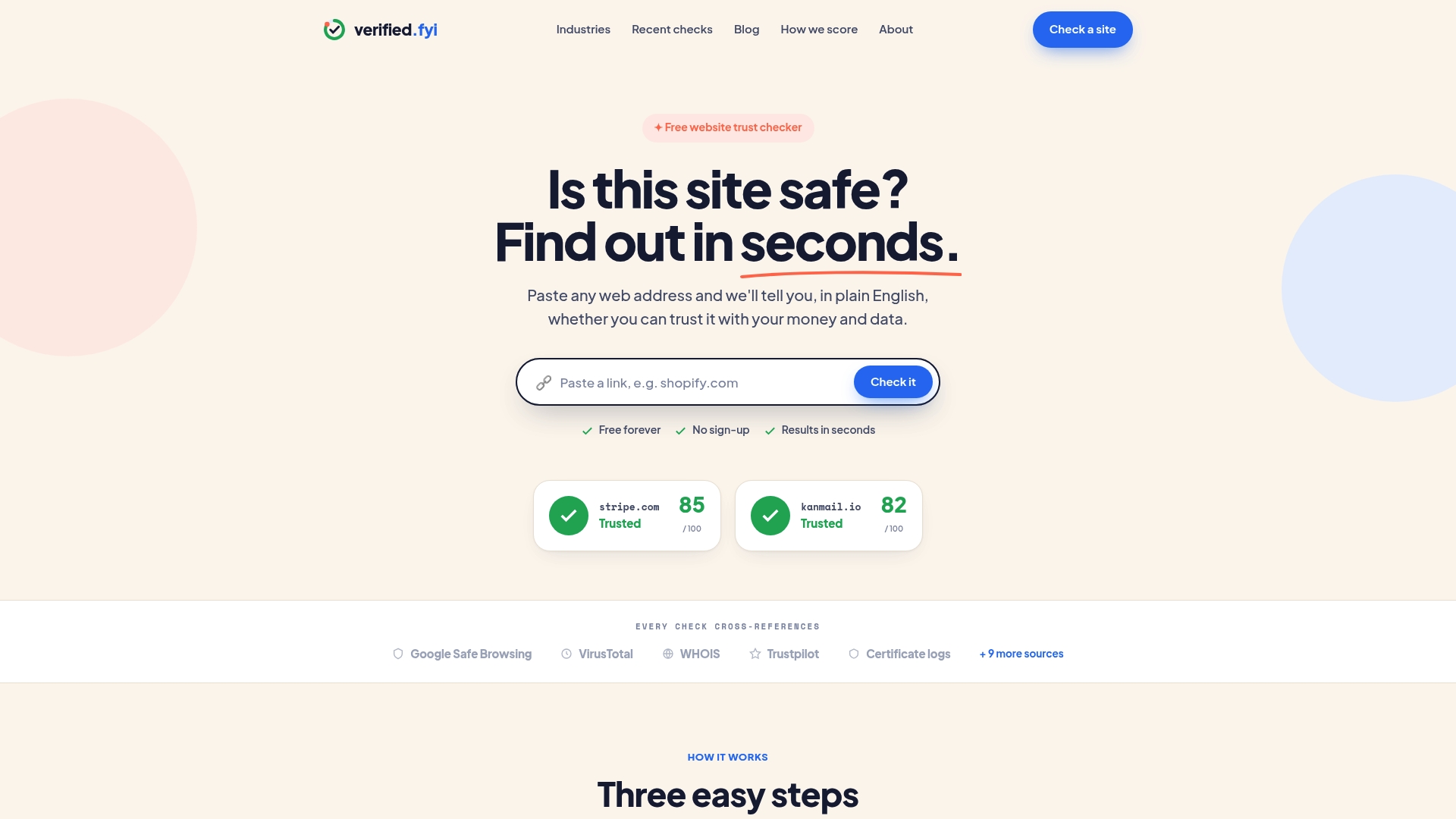
The service is free to use and doesn't require creating an account first. It's worth thirty seconds any time a deal feels slightly off, a link arrives from an unfamiliar sender, or a "seller" tries to move you off DHgate entirely. Browse recently checked websites to see the kind of red flags other shoppers have already flagged, or head straight to Verified fyi and paste in the link you're unsure about before you type in a single card digit.
Sources
- USTR releases 2023 review of notorious markets for counterfeiting and piracy
- What is DHgate, and should you use it? — Wired
- DHgate app safety and platform analysis — Newsweek
- DHgate Reviews | Trustpilot
FAQ
Is it safe to buy from DHgate?
DHgate is a legitimate marketplace with buyer protections in place, but safety depends heavily on the individual seller and payment method. Stick to small, unbranded purchases, pay on-platform with a credit card, and vet the seller's rating before ordering.
Can I trust DHgate with my credit card information?
DHgate reports standard security measures including SSL encryption and optional two-factor authentication, but using a virtual card number adds an extra layer of protection if a seller's page is ever compromised. Credit cards also give you Fair Credit Billing Act dispute rights that debit cards and bank transfers don't offer.
Is it possible to get scammed on DHgate?
Yes, and the most common scams involve fake tracking numbers, sellers pressuring buyers to pay outside the platform, and phishing emails mimicking DHgate's branding. Staying inside DHgate's escrow and messaging system, and never clicking order links from unsolicited emails, closes off most of these scams.
Are items on DHgate fake?
Some are. DHgate has repeatedly appeared on the USTR's Notorious Markets List for facilitating counterfeit goods, so branded and luxury items carry meaningfully higher fake-product risk than generic, unbranded merchandise.
How do I know if a DHgate seller or link is legitimate?
Check the seller's rating and transaction history inside DHgate first, then run any external link, such as a tracking page or payment request, through a tool like Verified fyi to check it against known scam signals before entering any payment information.