
Resale listings can be legitimate, but ticket resale scams are common: fake files, duplicate sales and speculative listings all circulate. Before you pay, confirm the seller's transfer method and check the site itself. Pay by credit card whenever possible. If you suspect fraud, call your card issuer to start a dispute and report it at reportfraud.ftc.gov right away.
TL;DR:
- Accept only an official mobile or platform transfer, or will call; screenshots can be duplicated and do not prove that a ticket is valid.
- Pay by credit card, keep receipts and messages, and send written notice to the issuer within 60 days if tickets never arrive or the charge is wrong.
- Walk away if a seller demands Zelle, Cash App, gift cards, or wire transfers, pressures you to hurry, or refuses to provide order details.
- For speculative listings, require proof of purchase or a platform guarantee before paying, since the seller may cancel if they cannot secure the tickets.
- A website trust score can flag lookalike or low reputation sites, but it cannot verify a particular seller’s tickets, so check the transfer separately.
Table of Contents
- Which common scam types should you know before you buy?
- What red flags should you look for on a listing?
- How do you buy resale tickets safely, step by step?
- Which payment method protects you if something goes wrong?
- What should you do if you were scammed?
- Why trust our site checks for resale websites?
- Why verification beats vigilance alone
- Check the site before you pay
- FAQ
- Sources
Which common scam types should you know before you buy?
Each scam leaves evidence behind, and knowing the pattern is half the defense.
- Lookalike websites copy an official seller's design with a slightly misspelled address, a trick the BBB documents in its Ticketmaster lookalike warning. Read the full URL and the lock icon before entering card details. Our guide to spotting fake company websites walks through the checks.
- Fake ticket files arrive as PDFs or images with barcodes that won't scan at the gate. Blurry logos, mismatched fonts and a missing order number are typical giveaways.
- Duplicate tickets are sold to several buyers at once. Whoever scans first gets in, and everyone else is turned away.
- Speculative listings advertise tickets the seller doesn't own yet. The seller hopes to buy them at on-sale and may cancel on you if they can't.
- Bot and account-bypass operations bulk-buy inventory, then resell at inflated prices. An FTC complaint describes resellers using thousands of fictitious accounts, virtual credit cards and proxies to get around purchase limits.
What red flags should you look for on a listing?
Most fraudulent listings fail a quick scan. Run through these before you click buy:
- The seller asks for Zelle, Cash App, gift cards or a wire transfer. Peer-to-peer payments are hard to reverse, and the CFPB has acted against a major payments operator over weak fraud handling.
- The only proof offered is a screenshot instead of an official transfer.
- The account is brand new, has few reviews or gives inconsistent contact details.
- The seller pushes urgency: "three other buyers are waiting."
- The price is far below market for a high-demand event, or the seller promises an "exclusive presale" with no proof.
- The seller can't or won't share an order number, proof from the primary seller or a clear transfer method.
Our vendor fraud checklist covers these seller checks in more depth.
Pro Tip: Ask the seller one specific question, such as which transfer method they will use. Scammers tend to dodge it or answer vaguely, while real sellers answer in one line.
How do you buy resale tickets safely, step by step?
Follow these in order. Each step narrows the risk before you spend anything.
- Start with official marketplaces or verified resale listings, and read the buyer-protection policy first. The BBB advises choosing resellers that offer buyer protection and reviewing the reseller's BBB profile.
- Confirm how the tickets will reach you: official mobile transfer, a ticketing-platform transfer or will-call. Never accept screenshots.
- Check any unfamiliar site before paying, using the free checker described below.
- Pay by credit card and save every receipt and message.
- Verify the seller: account age, consistent bio, reviews and BBB entries.
- If a listing looks speculative, ask for proof of purchase or a platform guarantee before you pay.
| Step | What to confirm | Why it matters |
|---|---|---|
| Marketplace | Written buyer protection | Gives you a claims process |
| Transfer | Official transfer, no screenshots | Tickets are tied to your account |
| Payment | Credit card | Dispute rights apply |
| Seller | Account age and reviews | Filters out throwaway accounts |
For a broader routine, our safe online shopping checklist adapts well to ticket purchases.
Which payment method protects you if something goes wrong?
A credit card is your strongest option. Federal law lets you dispute billing errors, such as items that never arrived, within 60 days of the charge appearing on a statement, and disputes often require written notice. Our partners at Finja explain why credit card fraud protection matters if you want the background.
Peer-to-peer apps and direct transfers offer weaker protection, and recoveries are harder. Here is what to do if a ticket fails:
- Keep receipts, messages, screenshots of the listing and any proof the gate denied entry.
- Expect bank timelines. Banks generally have ten business days to investigate unauthorized transactions, sometimes longer, and may issue a temporary credit meanwhile.
- If the marketplace offers a guarantee, file your claim promptly with proof of non-entry or cancellation.
Timing matters: the CFPB's guidance on fixing credit card billing mistakes stresses keeping records and filing written notice within 60 days.
What should you do if you were scammed?
Move quickly and in this order:
- Contact your card issuer, file a dispute, send written notice if required and keep copies of everything.
- File a report at Reportfraud, then complain to the marketplace or payment app involved.
- Report lookalike sites and marketplace fraud to BBB Scam Tracker.
- If the loss is large, consider small claims court or local law enforcement, after you have gathered full evidence.
- Change any saved payment details and watch your accounts for further charges.
Why trust our site checks for resale websites?
We analyze technical and reputation signals to produce an instant trust score. Paste any unfamiliar resale URL into our free checker to flag lookalike or low-reputation sites before you pay. Our guides draw on our published work on phishing warning signs and why site verification protects shoppers. A score tells you about the site, not about a specific seller's tickets, so use it alongside the steps above.
Why verification beats vigilance alone
The advice most people hear is "be careful," which is not a plan. The enforcement record points somewhere more useful: scams succeed at the moments when buyers skip a check, usually because the price looks good and the clock is ticking.

I would rank the priorities this way. First, control the payment method, because that is the one decision that decides whether you can get money back. Second, insist on an official transfer, because a screenshot proves nothing. Third, check the site before you hand over a card number, because it takes seconds and removes a whole class of lookalike fraud.
What I think is overrated: hunting for subtle flaws in a ticket image. Good fakes look fine, and you will not win that contest. What is underrated: walking away. No concert is worth a rushed purchase from a seller who dodges simple questions. The resale market is not hopeless, but it rewards buyers who treat verification as the first step rather than the cleanup.
— Nick
Check the site before you pay
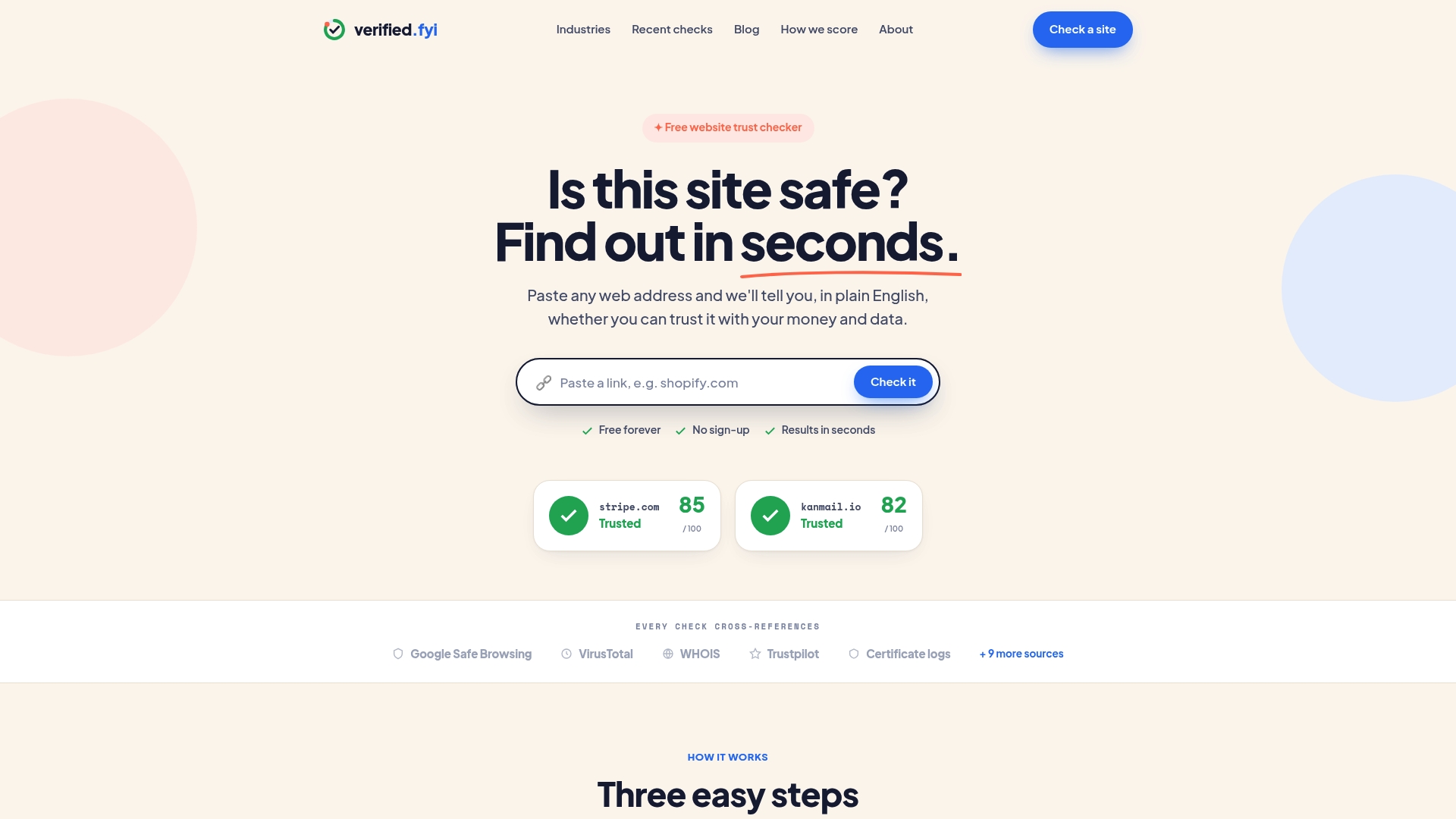
A few seconds of checking can save you the dispute process entirely. We built our tools for exactly that moment:
- Paste a resale URL into our free website trust checker for an instant score and risk breakdown.
- Read the detailed report to see which signals raised concern.
- Browse recently checked websites to see how other sites scored.
- Use our trust badge to document a site you have verified.
Run your next listing through the checker now, before any money moves.
FAQ
What are the most common ticket scams right now?
The most common are lookalike websites, fake ticket files, duplicate sales, speculative listings and bot-driven bulk buying. Each one works by getting you to pay before you can confirm the ticket is real. The FTC has taken action against resellers for illegal bulk-buy tactics.
How do you know someone is scamming you for tickets?
Warning signs include requests for payment through Zelle, Cash App or gift cards, and screenshots instead of an official transfer. Pressure to act fast and a refusal to share order details are also red flags. A price far below market for a sought-after event should make you stop.
How can you avoid getting scammed by ticket resellers?
Buy from platforms with written buyer protection, confirm the transfer method and pay by credit card. Check the seller's account history and run unfamiliar sites through a trust checker first. The BBB's reseller tips recommend reviewing the reseller's BBB profile.
Which ticket resale sites are legitimate?
Legitimate resale sites publish clear buyer-protection terms, use official transfers and explain their claims process. Even so, read the policy before you buy, since guarantees differ and require you to file correctly. Platform materials note that buyers still need to understand what a claim requires.
Sources
- BBB Scam Alert: How to avoid Ticketmaster lookalike scams
- FTC Takes Action Against Ticket Resellers for Using Illegal Tactics to Bypass Ticket Limit Protections in Violation of Better Online Ticket Sales Act | Federal Trade Commission
- Reportfraud